
Review · KYOTO
Kyoto: Nighttime Zen Meditation and Matcha Tea Experience
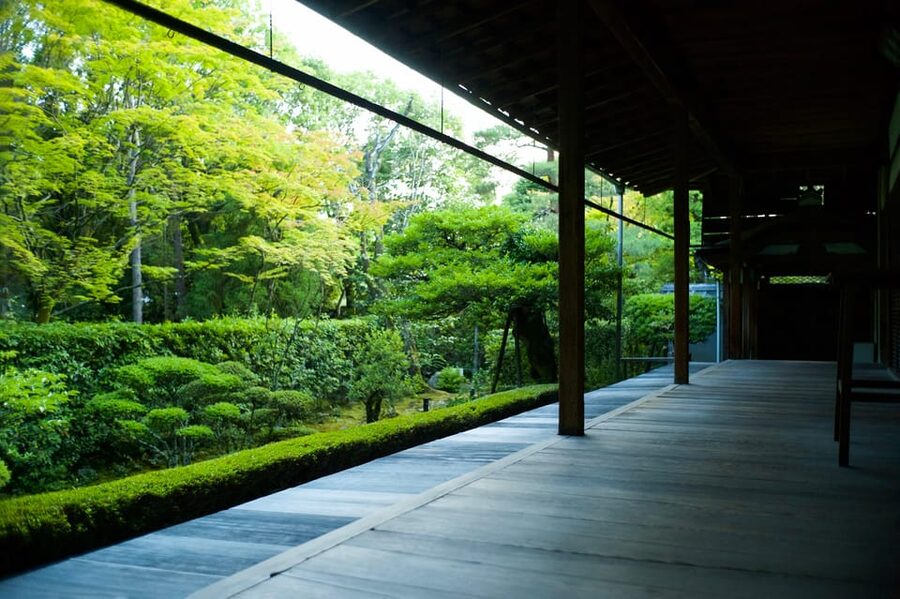
Keishunin Temple takes on a different character after dark. Its four gardens glow under careful lighting, while a local guide explains the temple, the quiet tea room called Sehakuan, and the painted sliding doors by Kano Sansetsu. The pace is calm and the setting feels far removed from Kyoto’s busy sightseeing streets.
I like the small private-group format and the chance to hear from Deputy Chief Priest Yasumasa Arashima during meditation. I also like that this is more than a garden visit: you sit, listen, try zazen, drink matcha, and eat a traditional sweet in one carefully shaped 90-minute experience.
The main drawback is the price, $206 per person, which is high for an hour and a half. You are paying for special evening access and a personal cultural encounter, not a long temple tour. The experience also excludes children under 12 and wheelchair users.
Key points to know before booking
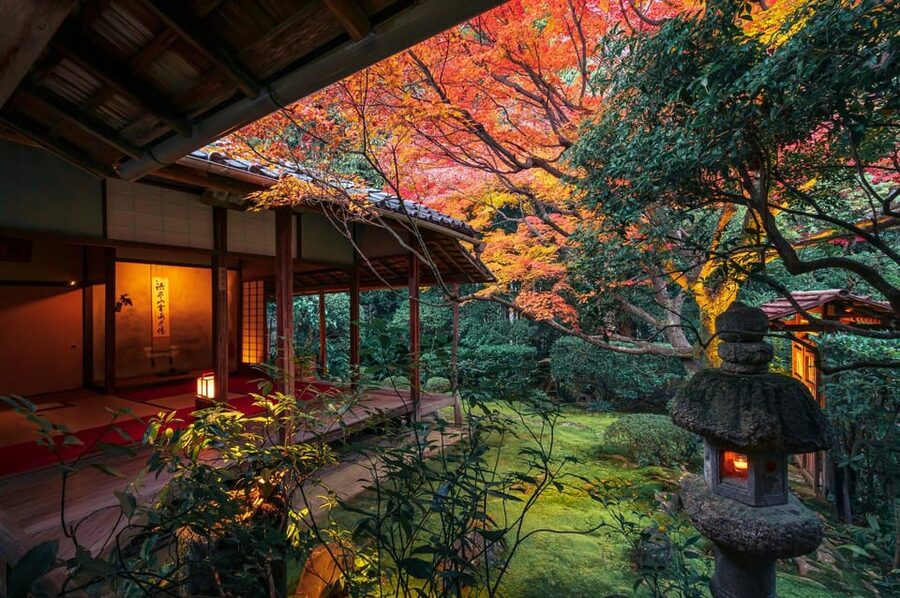
- Four illuminated gardens: Keishunin’s gardens are designated national historical sites and scenic spots, and nighttime lighting changes how you read their shapes, stones, and plantings.
- A real meditation session: Deputy Chief Priest Yasumasa Arashima leads zazen, giving you a direct look at Zen practice rather than a quick photo stop.
- Sehakuan tea room: You tour this tucked-away tea space and learn how it fits into the temple’s cultural life.
- Kano Sansetsu paintings: The fusuma paintings add an art-history layer to the visit, especially if you enjoy Japanese screens and painted interiors.
- Matcha and a sweet: The final tea service gives the evening a gentle social finish after the silence of meditation.
- Private, guided access: English and Chinese guides are available, and the private format makes it easier to ask questions or request translation.
Entering Keishunin after dark
This experience begins at Keishunin, a sub-temple of Kyoto’s Myoshinji Temple complex. You meet your guide at the temple, so transportation to and from the meeting point is your responsibility. Check the meeting details carefully when you book, since the activity does not include transfers.
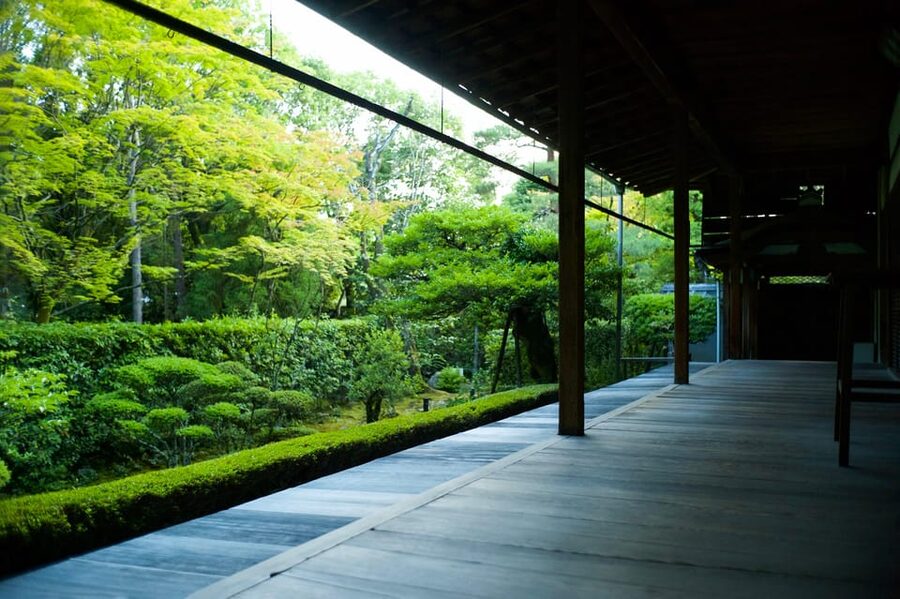
The nighttime setting is the main reason to choose this visit over a standard daytime temple stop. Artificial light picks out the gardens without turning them into a bright spectacle. You see forms and details in a slower way, with fewer distractions and a stronger sense of quiet.
I would arrive with comfortable clothes and an extra warm layer. The instructions specifically call for warm clothing, and a temple visit at night can feel cool, especially when you are sitting still for meditation. Wear something easy to sit in for a period of time.
Smoking and flash photography are not allowed. That matters here. The lighting and silence are part of the experience, and a flash would spoil both the atmosphere and the painted interiors.
More Matcha Experiences in Kyoto
- Kyoto: Arashiyama Bamboo Forest, Monkeys, Matcha & Temple Tour
★ 5.0 · 759 reviews - Kyoto: Tea Ceremony Meditation – Make Matcha with Tea Master
★ 4.8 · 406 reviews - Kyoto: Kimono Tea Ceremony with Matcha and Sweet
★ 4.9 · 249 reviews
Four gardens under evening light
The tour includes all four Keishunin gardens. They are designated as nationally designated historical sites and scenic spots, which gives you a useful sense of their cultural importance. This is not simply a walk around attractive grounds. The gardens are the setting through which your guide explains the temple’s design and traditions.
The lighting makes the visit feel different from a daytime garden tour. Shadows become part of the view, and the illuminated areas guide your attention. You may notice the arrangement of rocks, plants, pathways, and open spaces more clearly because the darkness removes some visual clutter.
Your guide provides the cultural context, but the experience is not presented as a long academic lecture. The goal is to help you understand what you are looking at before the visit shifts toward meditation and tea. I like that progression: first you observe the gardens, then you move indoors and turn your attention inward.
Keep your expectations realistic. This is a 90-minute activity, so you will not have unlimited time to study every garden. The visit is designed as a focused introduction, not a full architectural survey of Myoshinji. If you want to linger over every composition or take many photographs, the schedule may feel tight.
Sehakuan and Kano Sansetsu’s painted doors
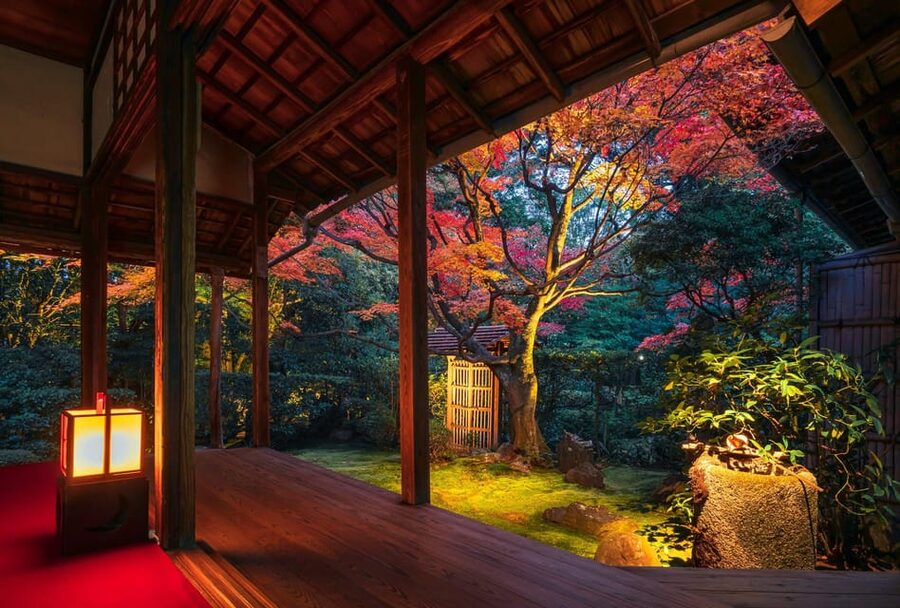
The tour continues to the tea room known as Sehakuan. It is described as a hidden tea room, meaning one of the special spaces that is easy to miss during an ordinary temple visit. Seeing it as part of a guided evening program gives the room more meaning than a quick glance through an open doorway.
Tea rooms are built around attention to space, movement, and restraint. Here, the room connects naturally with the later matcha service. You first learn about the setting, then experience the tea tradition in a simple, direct way.
You also view Kano Sansetsu’s fusuma paintings. Fusuma are sliding doors that help divide Japanese rooms, and their painted surfaces turn ordinary architecture into art. This stop will appeal to you if you enjoy Japanese painting, temple interiors, or the small details that are easy to miss on a self-guided visit.
Photography rules are important in this part of the tour. Flash photography is not permitted, and you should follow your guide’s instructions about where and when you may take pictures. The paintings are part of a working religious and cultural site, not just a display arranged for tourists.
Zazen with Deputy Chief Priest Yasumasa Arashima
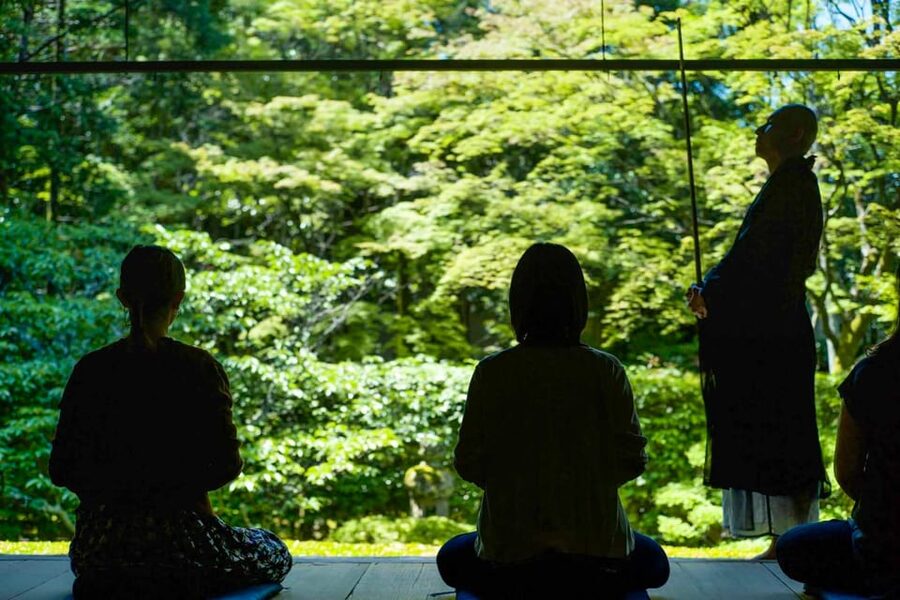
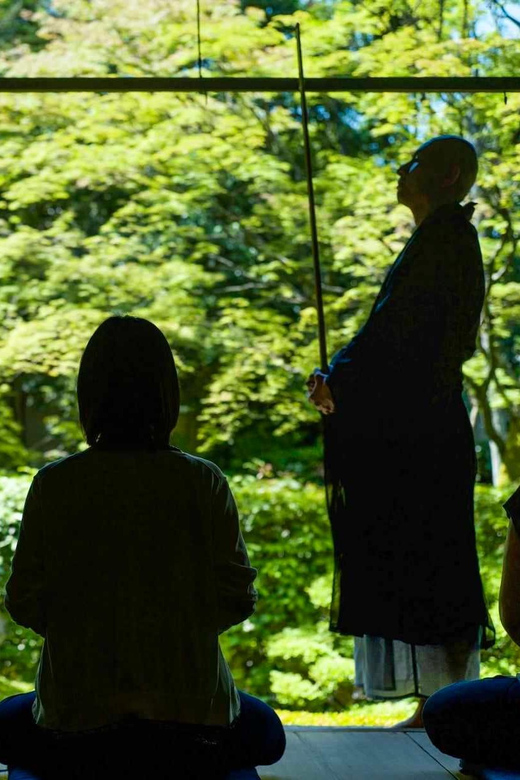
The central moment is zazen meditation, guided by Deputy Chief Priest Yasumasa Arashima. Zazen is seated Zen meditation, and you do not need to arrive with prior experience. The value here is not proving that you can sit perfectly still. It is trying the practice in the place where it belongs.
One useful detail from the experience is that you learn about the custom used when a practitioner becomes too tired and needs a reminder to continue. This gives you a more practical view of meditation. Zen practice is not presented as instant relaxation or a spa treatment. It has discipline, posture, attention, and moments of discomfort.
The meditation is guided, which helps if you are unsure what to do. An English-speaking guide can translate the instruction when needed, and Chinese language support is also available. Translation may add a little time between the original words and your understanding, but it lets you take part in a session that would otherwise be difficult to follow.
I would not book this expecting a long silent retreat. The meditation is one part of a broader temple visit, and the full activity lasts 90 minutes. Still, it offers something many sightseeing programs lack: a chance to stop looking and simply pay attention.
The private-group setup should make this easier for people who feel nervous about trying meditation in a large public class. You can ask for clarification, and the guide can help explain customs that might otherwise seem mysterious. The experience is especially well suited to first-time visitors who want a gentle introduction rather than a strict religious program.
More Zen Tea Sessions around Kyoto:
- Kyoto: Mindful Tea Ceremony in 100-Year-Old Teahouse
★ 4.8 · 160 reviews - Oboro | Mindful Tea Ceremony in a 100-Year-Old Kyoto Teahouse
★ 5.0 · 19 reviews - The Art of Mindful Living: Tea Ceremony in Kyoto
★ 5.0 · 16 reviews - Kyoto Hidden Riverside Zen Mediation and Uji Matcha Experience
★ 5.0 · 9 reviews
Matcha, a Japanese sweet, and conversation
After meditation, you try matcha and a traditional Japanese sweet. This is a modest tasting rather than a full meal, so plan to eat beforehand if you need dinner. The tea service gives the evening a warm, social ending after the stillness of zazen.
The pairing also makes cultural sense. The sweet balances the bitterness of matcha, while the act of preparing and drinking tea slows the pace of the visit. You are not simply handed a drink on the way out. The tea becomes part of the temple experience.
There is also time for a short conversation about the meditation and your impressions. This informal exchange is useful because it lets you ask questions while the experience is still fresh. One of the strongest features of the program is this movement from explanation, to practice, to conversation.
Do not expect a large tea ceremony performance with many formal steps. The information provided describes matcha and a Japanese sweet tasting, along with a tour of the tea room. If your main goal is a detailed study of tea procedure, you may want a dedicated tea ceremony elsewhere in Kyoto. If you want a well-balanced evening that includes tea without making it the only focus, this format works better.
What the $206 price really covers
At $206 per person, this is not a budget temple visit. You can see many Kyoto temples for a small admission fee, and a short meditation session may cost far less in another setting. The price needs to be judged against what is included here.
You receive special nighttime access, a private group, a live guide in English or Chinese, a tour of four protected gardens, entry into Sehakuan, a look at Kano Sansetsu’s fusuma paintings, guided zazen, matcha, and a Japanese sweet. Most important, the visit is built around access and instruction that you are unlikely to assemble on your own in one short evening.
I see the value if you care about quiet access and personal guidance. The experience brings together gardens, art, Zen practice, and tea without requiring you to organize several separate visits. It can also fill a useful slot after the daytime crowds have faded.
The value is weaker if you mainly want garden photography, a long temple walk, or a full meal. Ninety minutes passes quickly, and the price is difficult to justify if you plan to rush through the meditation or do not care about the cultural explanation.
The private format helps the price make more sense for couples, families with eligible older children, or a small group with a strong interest in Japanese culture. For a solo visitor, the per-person cost may feel harder to accept unless this is one of the main experiences of your Kyoto stay.
Who should book this Kyoto Zen experience
I would recommend it to you if you want a calm evening with real structure. You see important spaces, learn from a guide, try a Zen practice, and finish with tea. It is a good fit for visitors who want more than photographs but do not want a full-day religious or cultural course.
It also suits people who are curious about meditation but do not know how to begin. The guided format removes much of the uncertainty, and the explanation about meditation customs gives you a glimpse of the practice beyond the usual tourist version.
Families need to pay close attention to the age rules. The activity is not suitable for children under 12. Primary school students and older are welcome according to the conditions, but each participant below junior high school age must have a parent or guardian with them. The information also lists the experience as unsuitable for wheelchair users.
This may not be the right choice for you if you dislike sitting quietly, have difficulty wearing warm but comfortable clothing, or want a lively evening filled with food and entertainment. The appeal is restraint. You are asked to slow down and respect the temple setting.
The activity does not operate during Obon and New Year holidays. You also need a reservation, and starting times vary, so check availability before planning the rest of your evening.
Cancellation and practical planning
You can cancel for a full refund up to 72 hours, or three days, before the start time. From three days before the activity through the day before, the charge is 20 percent. On the day, it is 50 percent, and missing the activity without notice or arriving after it starts results in a 100 percent charge.
Give yourself enough time to reach the meeting place. Transportation is not included, and the temple setting rewards arriving calm rather than rushing in at the last minute. Since the program depends on a quiet sequence of garden viewing, meditation, and tea, late arrival could affect more than your own schedule.
Bring warm clothing and wear comfortable clothes. Avoid flash photography, and remember that personal expenses beyond the listed tea and sweet are not included.
Should you book Keishunin at night?
Book this experience if the idea of illuminated gardens followed by zazen and matcha sounds more appealing than another crowded Kyoto attraction. Its strongest features are the private setting, the careful evening lighting, and the chance to receive meditation guidance from Deputy Chief Priest Yasumasa Arashima.
Skip it if $206 feels too steep for 90 minutes, or if your priority is a broad temple tour, extensive photography, or a full tea ceremony. For the right visitor, though, this is a focused and memorable pause in a busy Kyoto itinerary. You leave with more than a few garden views: you have tried a Zen practice, seen important art and architecture, and shared tea in a temple setting.
FAQ
Where does the nighttime Zen meditation experience take place?
It takes place at Keishunin Temple, a sub-temple of Myoshinji Temple in Kyoto, on Japan’s main island of Honshu.
How long does the experience last?
The activity lasts 90 minutes.
What is included in the price?
The price includes a special night visit to Keishunin, a tour of four gardens, a visit to the Sehakuan tea room, viewing of Kano Sansetsu’s fusuma paintings, zazen meditation, matcha tea, and a traditional Japanese sweet.
Are English and Chinese guides available?
Yes. Live tour guide service is available in English and Chinese.
Can children participate?
Children under 12 are not considered suitable for this activity. Primary school students and older may participate, and each participant below junior high school age must be accompanied by a parent or guardian.
What should I wear and bring?
Bring warm clothing and wear comfortable clothes. Smoking and flash photography are not allowed.
Newly steeped around Kyoto
- Whisk Your Own Matcha: A Zen Matcha Experience at Temple★ 3.6 · 7 reviews
- Kyoto: Authentic Tea Ceremony in a Small Group★ 5.0 · 7 reviews
- Tea ceremony at Kyoto’s Zen Temple Teahouse★ 5.0 · 2 reviews
- Uji Walking Tour – Byodo-in temple and Tea Ceremony from Kyoto★ 3.5 · 3 reviews
- Tea Ceremony Experience in Traditional Kyoto Townhouse★ 5.0 · 19 reviews
- Tea Ceremony in 150 Years Old Townhouse with Tables and Chairs★ 5.0 · 22 reviews
- Silent Beauty of Kyoto Zen Walk and Tea Experience★ 5.0 · 2 reviews
- Traditional Tea Ceremony in Kyoto★ 4.5 · 3 reviews
Zen Tea & Meditation Experiences, compared.
Kyoto: Tea Ceremony Meditation – Make Matcha with Tea Master
Read our review →
Kyoto: Mindful Tea Ceremony in 100-Year-Old Teahouse
Read our review →
Tokyo: Practicing Zen with a Japanese Tea Ceremony
Read our review →
Nara:5 Type of Tea Tasting & Mindful Tea Ceremony
Read our review →
Learn Zen in a class of making Matcha tea near Osaka Castle
Read our review →
The Art of Mindful Living: Tea Ceremony in Kyoto
Read our review →
Shizuoka Shore Excursion: Zen, Matcha & Calligraphy Shimizu Port
Read our review →
Hue Retreat: Tea and Meditation with Vegetarian Meal
Read our review →Browse the lists this tea experience appears in