
Review · TOKYO
Practicing Zen through Japanese Tea Ceremony
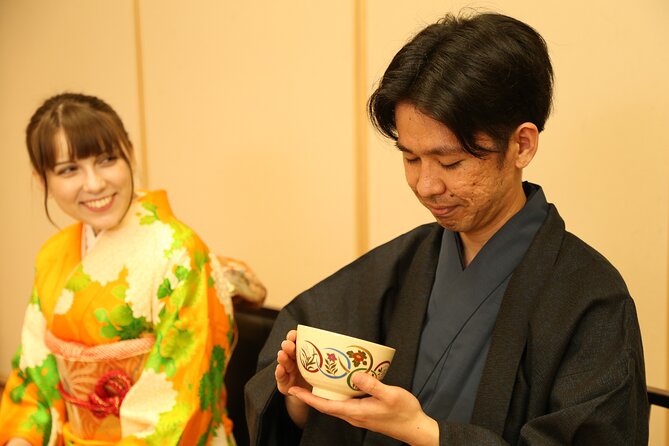
The most appealing part of this Tokyo experience is that you do not just watch a tea ceremony. You prepare your own matcha, follow the ritual step by step, and learn why each movement matters. I like the quiet pause it creates in a busy city, and I like the pairing of bitter matcha with carefully chosen wagashi sweets. The main caveat is that the Zen element is brief, with more time given to tea ceremony practice than to meditation or Zen theory.
You meet at Kikai Shinkō Kaikan in Shibakōen and spend about 75 minutes with a bilingual tea master. Miyuki and Yuuko have been especially praised for warm, clear instruction, while the setting may feel more functional than traditional: one account describes a basement room in an office building. That makes this a cultural lesson rather than a full temple-style retreat.
Key points before you book
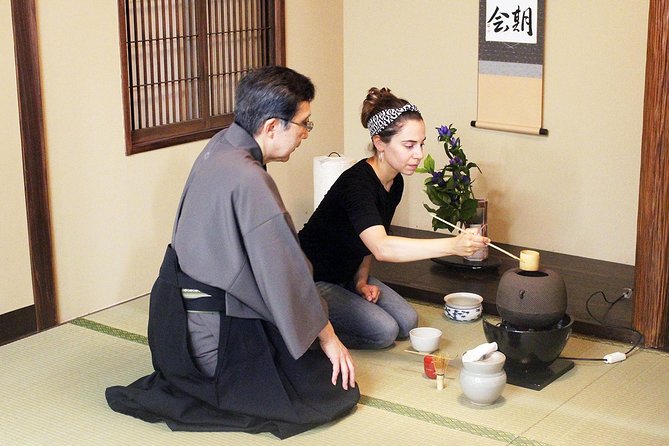
- You make tea yourself: After watching the tea master, you prepare a second bowl of matcha with direct instruction.
- Wagashi comes with the matcha: Traditional Japanese sweets are selected to balance the tea’s bitter flavor.
- The Zen portion is short: Expect an explanation of Zen ideas and a brief meditation, not a long spiritual session.
- English guidance is included: A bilingual licensed tea master explains the ceremony, utensils, scrolls, and related customs.
- The meeting point is in Shibakōen: The activity begins and ends at Kikai Shinkō Kaikan, near public transportation.
- The group can reach 28 people: This is a shared class, so the atmosphere may be less intimate than a private ceremony.
A calm hour in the middle of Tokyo
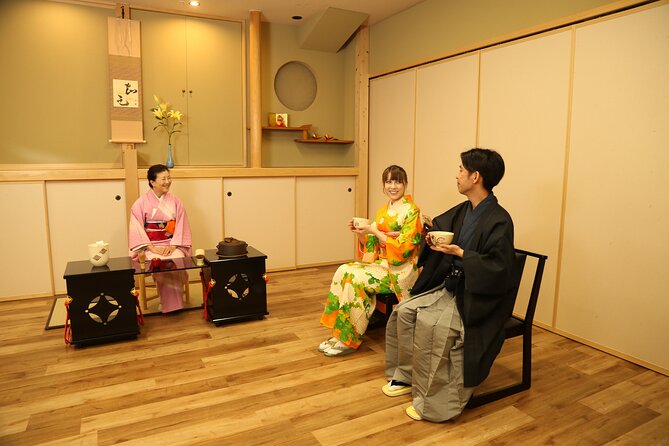
Tokyo can keep you moving from one sight to the next. This tea ceremony gives you a reason to stop. For about an hour and 15 minutes, the focus narrows to a bowl, a whisk, a sweet, and a set of deliberate gestures.
That pause is useful even if you are not especially interested in tea. The session connects dining, architecture, art, hospitality, and mindfulness in one compact experience. You will hear about the meaning of the ceremony, the role of the hanging scroll, and the purpose of the utensils rather than simply being served a drink.
I see this as a good choice for someone who wants cultural context without committing half a day to a museum or formal class. It also works well near the end of a Tokyo visit, when you have already seen major sights and want something slower.
The tone is respectful but not intimidating. The tea master performs the ceremony first, then explains the process so you can try it yourself. That order matters. You get to watch the flow before worrying about your own movements.
More Tea Ceremonies in Tokyo
- Kimono Tea Ceremony at Tokyo, Asakusa Maikoya
★ 5.0 · 638 reviews - Tokyo: Traditional Tea Ceremony with a Tea Master
★ 5.0 · 528 reviews - Tea Ceremony Workshop in Tokyo by the Experienced Instrucor
★ 5.0 · 189 reviews
What happens when you arrive at Kikai Shinkō Kaikan
The meeting point is Kikai Shinkō Kaikan, at 3-chōme-5-8 Shibakōen in Minato City. The location is near public transportation, and the activity returns to this same point at the end.
Do not picture a ceremony inside a famous temple or an old tea house. The available information describes a room in an office building, and one account specifically calls it a basement room. That may disappoint you if the setting is your main reason for booking.
At the same time, a practical room can make the instruction easier to follow. You are there to learn the sequence and meaning of the ceremony, and the tea master can keep the focus on those details. The setting seems designed for a class rather than for architectural drama.
The group limit is 28 people. That is not a tiny gathering, so you should not expect the hushed privacy of a private tea room. Still, the hands-on section gives the activity a personal element, since you do more than sit in the audience.
The opening explanation: tea, Zen, and Japanese aesthetics
The session begins with an explanation of the tea ceremony and its links to Zen practice. The tea master also discusses Japanese hanging scrolls and tea utensils in English.
This is where the class reaches beyond the simple act of drinking matcha. A scroll can help set the tone of a tea gathering, while the utensils are part of the ceremony’s visual and practical language. You learn to pay attention to objects that might otherwise look like decoration.
The Zen connection is presented as part of the ceremony’s way of concentrating on the present moment and treating the gathering with care. A short meditation is included, and it has been singled out as one of the particularly pleasant parts of the experience.
Keep your expectations in check, though. This is not a full Zen lesson or a silent retreat. If you want an extended meditation session, this may feel too brief. If you want a clear introduction to how Zen ideas influence Japanese hospitality and tea, the balance is more suitable.
Watching the tea master prepare matcha
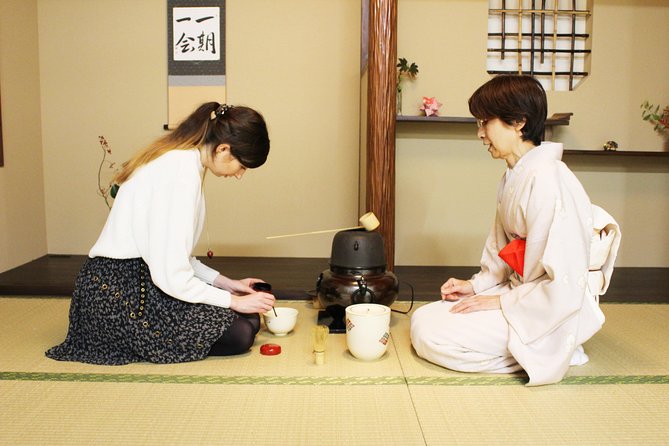
The tea master performs the ceremony before you try it. You see the preparation of authentic matcha, the handling of the utensils, and the measured pace of the ritual.
The value here is not only the finished bowl. The demonstration shows how a simple drink becomes a formal act of hospitality. The movements create order and give both the person preparing the tea and the person receiving it a role.
The class is led by a bilingual licensed tea master with at least five years of experience. The names of Miyuki and Yuuko are associated with warm welcomes and clear explanations, so you may encounter either of them depending on the session.
You should expect instruction rather than a performance with no explanation. The tea master explains what is happening and why, then gives you a chance to repeat the process. That makes the first demonstration easier to appreciate because you already know you will get your own turn.
More Zen Tea Sessions around Tokyo:
- Tokyo: Practicing Zen with a Japanese Tea Ceremony
★ 4.7 · 105 reviews - Kamkura: Private Zazen, Matcha at Bamboo Temple & Mindful Cuisine
★ 5.0 · 9 reviews - Tokyo Morning Japanese Tea and Meditation Experience in Japan
★ 5.0 · 2 reviews - Kyoto: Tea Ceremony Meditation – Make Matcha with Tea Master
★ 4.8 · 406 reviews
Matcha and wagashi: a small lesson in balance
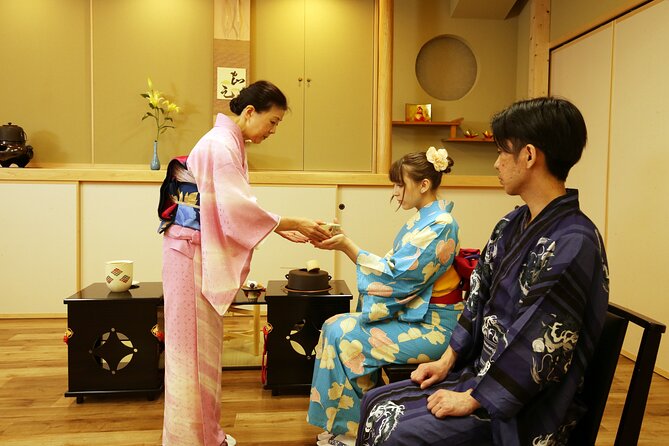
You receive ceremonial matcha and traditional Japanese sweet confections. The sweets are chosen to suit the flavor of the tea, which is important because matcha can taste strongly bitter and grassy if you are not used to it.
The wagashi gives your palate a softer, sweeter starting point. It is not just an extra snack. The pairing shows how Japanese sweets can prepare you for and balance the tea rather than compete with it.
There is no promise of extra food or drinks beyond the included sweets and matcha. If you need a full meal, eat beforehand. This is a tasting within a cultural lesson, not a café stop.
For many people, this pairing will be one of the most immediately enjoyable parts of the session. You get to taste something traditional while also learning why it belongs in the ceremony. The portion and specific sweet are not stated, so do not book this expecting a substantial dessert course.
Your turn to make tea
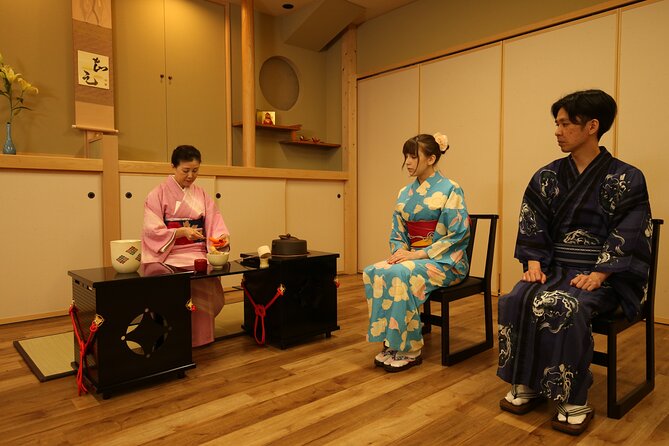
The strongest practical feature is the second ceremony, which you perform yourself with instruction. You follow the tea ceremony process rather than simply copying a demonstration from a distance.
This hands-on turn gives the session a useful sense of purpose. You learn through movement: preparing the matcha, using the utensils, and observing the order of the ritual. Even if your bowl does not look perfect, the attempt helps the ceremony make more sense.
You are not expected to arrive with prior experience. The tea master explains the process and guides you through it. The point is not speed or technical mastery. It is learning to handle the preparation with attention and respect.
The shared format may affect how much individual correction you receive. With a maximum of 28 people, the tea master has to divide attention among the group. Still, the chance to prepare the tea yourself is more valuable than a purely staged demonstration.
How much Zen should you expect?
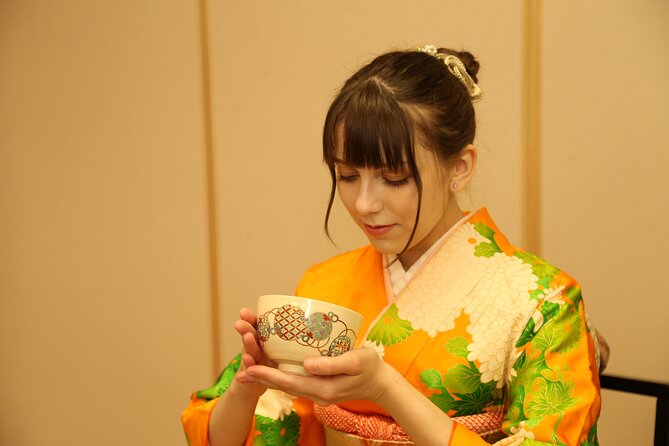
The title places Zen at the center, but the actual session is best understood as a tea ceremony class with a Zen introduction. You receive an explanation of the ceremony’s connection to Zen practice and take part in a short meditation.
That distinction matters when you decide what to book. If you are looking for a practical cultural experience with a small mindfulness element, the format fits well. If you want a detailed study of Zen philosophy, you will likely find the theory too light.
I like this balance for a first encounter. Too much theory can make a short activity feel like a lecture, while no context would reduce the ceremony to a set of unfamiliar gestures. Here, the explanation gives the actions meaning without taking over the whole session.
The calm comes less from a long period of silence and more from the pace and attention of the ritual. You temporarily stop checking the next attraction and focus on what is happening in front of you. That is a modest but worthwhile form of rest.
The setting: useful, but not traditionally atmospheric
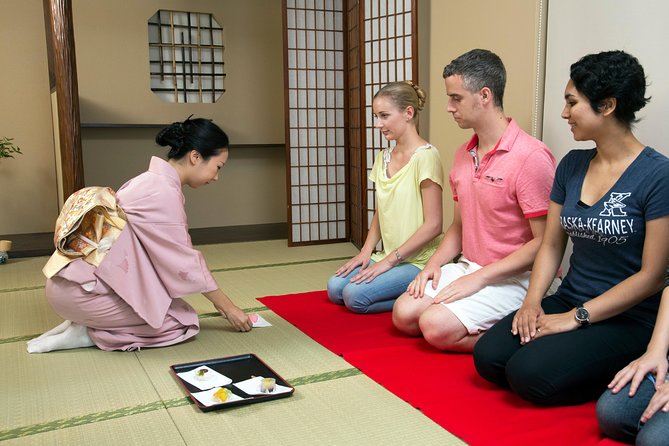
The setting deserves an honest mention. This activity recreates the atmosphere and practices of a traditional tea ceremony, but it does not take place in a famous historic tea house according to the available details.
A basement room in an office building can feel plain. If you are choosing between this and a ceremony known for its garden, architecture, or temple setting, compare those features carefully. Here, the cultural instruction is the main product.
The advantage is convenience and focus. You can reach the meeting point near public transportation, attend a compact class, and return to your sightseeing plan without giving up a whole afternoon. For a first introduction, that trade-off may be sensible.
The room also means weather should not dominate the activity. The ceremony itself remains the focus rather than an outdoor view. Just do not expect the venue alone to provide the atmosphere of old Kyoto.
Price, timing, and group size
The price is $64.50 per person. I consider that reasonable if you value direct instruction and want to prepare the tea yourself. You are paying for a bilingual licensed tea master, the demonstration, matcha, wagashi, explanations, and your own guided tea preparation.
The value is weaker if you only want to taste matcha or take a few photographs. You can find tea drinks more cheaply elsewhere. This price makes sense because the session is a cultural lesson with participation, not simply a beverage stop.
At about 75 minutes, the activity is easy to fit into a Tokyo schedule. You can use it as a mid-day pause between nearby plans or as a quieter activity late in your visit. The exact time of day is not specified, so check the selected departure when booking.
The group limit is 28 people. A larger class can reduce the private feeling, but it may also suit you if you prefer a relaxed introduction without the pressure of a one-to-one lesson. Group discounts are available, which can help if you are booking for several people.
Confirmation arrives within 48 hours of booking, subject to availability. Build a little flexibility into your plans rather than arranging a tight connection immediately afterward.
Who will enjoy this most?
I would recommend this experience to you if you want to understand an everyday cultural form through participation. It suits first-time visitors who have never handled a bamboo whisk, as well as anyone curious about how tea, hospitality, and Zen practice meet.
It is also a good fit for couples, families with older children, and small groups who want a shared activity. The group discount may make the price easier to manage for several people.
You may want to skip it if you need a highly scenic venue, a long meditation, or a substantial meal. You may also prefer a smaller private class if close personal guidance is your top priority.
Language should not be a major barrier. The tea master is bilingual, and the explanations of the ceremony, Zen practices, hanging scrolls, and utensils are given in English.
Practical advice before you go
Arrive at the correct meeting point, Kikai Shinkō Kaikan in Shibakōen, and allow enough time to find the building. The activity begins and ends there, with no pickup or drop-off service.
Wear something that lets you sit and move comfortably. The supplied details do not specify a dress code, but a tea ceremony involves careful handling and a measured posture, so comfort will help you pay attention.
Eat lightly beforehand if you need more than sweets. Matcha and traditional confections are included, but extra food and beverages are not.
If your plans change, free cancellation is available up to 24 hours before the start time for a full refund. Changes or cancellations inside that 24-hour window are not accepted or refunded, based on local time.
Should you book this tea ceremony?
Book it if you want a hands-on cultural lesson rather than a polished show. The chance to make your own matcha, taste wagashi, and hear how tea connects with Zen gives the hour real substance.
Go in expecting a practical class in a functional room, not a temple retreat. The Zen portion is short, and the group may be as large as 28 people. For many visitors, that is a fair trade for an English explanation, a guided ceremony, and a calm break from Tokyo’s fast pace.
FAQ
Where does the tea ceremony take place?
The meeting point is Kikai Shinkō Kaikan, 3-chōme-5-8 Shibakōen, Minato City, Tokyo 105-0011, Japan.
How long does the experience last?
The activity lasts approximately 1 hour and 15 minutes.
What is the price?
The listed price is $64.50 per person. Group discounts are available.
Does the activity include matcha and sweets?
Yes. Authentic matcha green tea and traditional Japanese sweet confections are included.
Can I prepare the tea myself?
Yes. After the tea master’s ceremony, you take part in a second tea ceremony and prepare tea yourself with instruction.
Is the instruction available in English?
Yes. A bilingual licensed tea master explains the ceremony, Zen practices, hanging scrolls, and tea utensils in English.
How large can the group be?
The activity can have a maximum of 28 participants.
Is transportation included?
No. Pickup and drop-off services are not included. The activity begins and ends at Kikai Shinkō Kaikan, which is near public transportation.
Can I cancel for a full refund?
Yes. You can cancel at least 24 hours before the experience start time for a full refund. Cancellations or changes made less than 24 hours before the start time are not accepted or refunded.
Newly steeped around Tokyo
- Yokohama : Tea Ceremony with Sweets and Souvenir★ 5.0 · 5 reviews
- Walking Tour: Yanaka,Nezu& Sendagi: Tea Ceremony & Old Tokyo★ 5.0 · 3 reviews
- Private Mochi・Matcha sweets Making Class Near Shibuya Area★ 5.0 · 22 reviews
- 2 Hours Mochi &Nerikiri Making & Matcha Class in Bunkyo★ 5.0 · 21 reviews
- Private Kimono and tea ceremony at local home near Tokyo Disney★ 5.0 · 6 reviews
- Kimono and Tea Ceremony in Asakusa Private Food Tour With Guide★ 5.0 · 4 reviews
- Giant Sushi Cooking Class: Make a 1.5m Sushi Roll in Tokyo★ 5.0 · 9 reviews
- Tokyo Tea Ceremony Class at a Traditional Tea Room★ 5.0 · 2 reviews
Zen Tea & Meditation Experiences, compared.
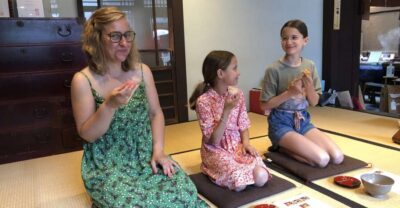
Kyoto: Tea Ceremony Meditation – Make Matcha with Tea Master
Read our review →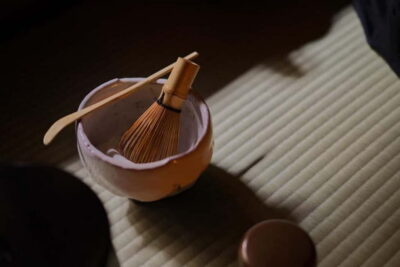
Kyoto: Mindful Tea Ceremony in 100-Year-Old Teahouse
Read our review →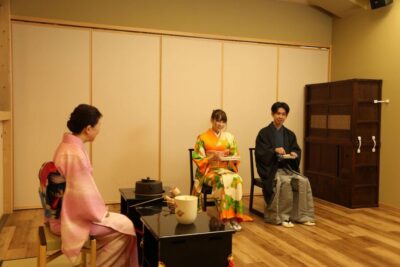
Tokyo: Practicing Zen with a Japanese Tea Ceremony
Read our review →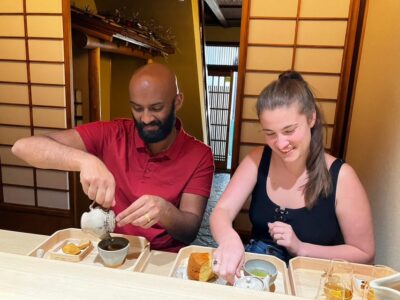
Nara:5 Type of Tea Tasting & Mindful Tea Ceremony
Read our review →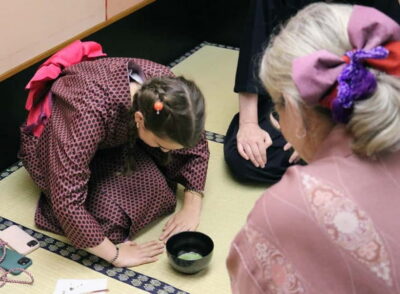
Learn Zen in a class of making Matcha tea near Osaka Castle
Read our review →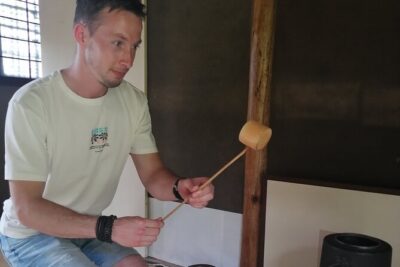
The Art of Mindful Living: Tea Ceremony in Kyoto
Read our review →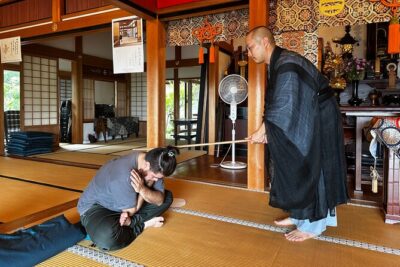
Shizuoka Shore Excursion: Zen, Matcha & Calligraphy Shimizu Port
Read our review →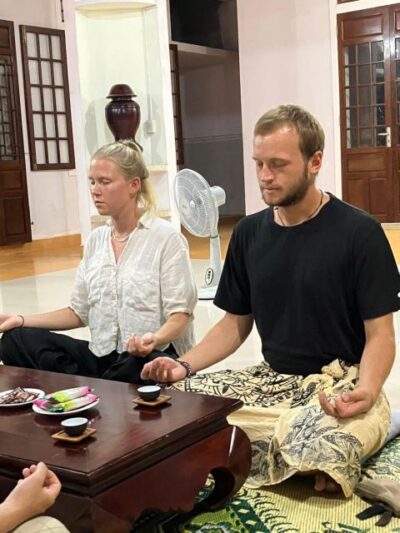
Hue Retreat: Tea and Meditation with Vegetarian Meal
Read our review →Browse the lists this tea experience appears in