
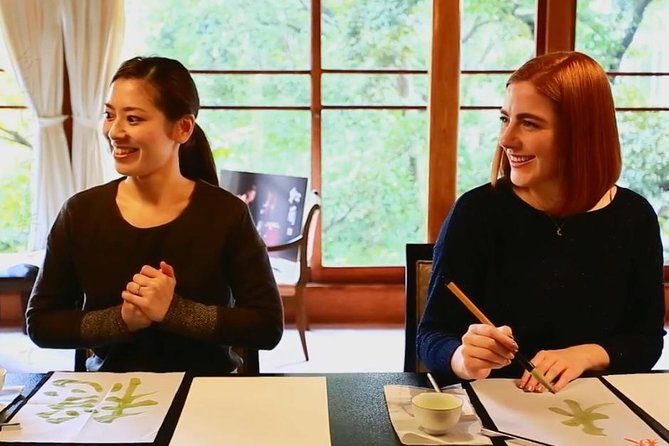
Review · SHIZUOKA
Experience mindfulness and tranquility with Matcha Calligraphy
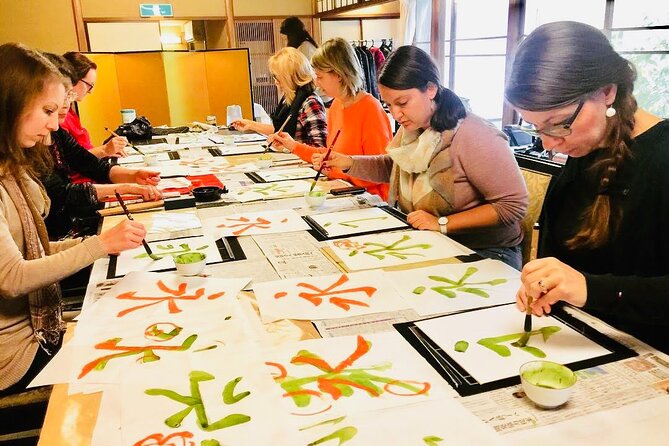
Matcha Calligraphy turns green tea into a changing work of art. During this 90-minute experience in Shizuoka, you’ll create your own hanging scroll while the matcha gradually changes color and fades, much like a small record of Japan’s changing seasons. Shoran, the calligraphy teacher, brings a personal link to the art through her grandfather’s calligraphy room and tea garden.
I like two things right away: you take home a handmade souvenir rather than a factory-made trinket, and your name is rendered in Kanji chosen for its meaning and connection to your personality. The main consideration is the price, $192.69 per person, which is a serious spend for an hour and a half. You’re paying for a small, guided cultural lesson and a one-of-a-kind artwork, not a long sightseeing tour.
Key points to know before booking
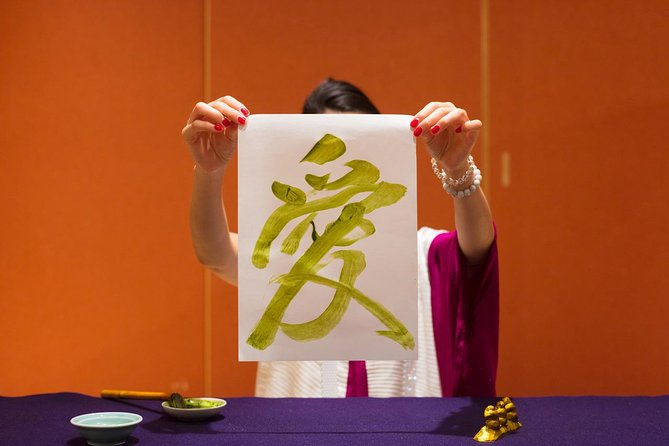
- Your matcha painting changes over time: The color gradually shifts and fades, making the scroll a living record rather than a fixed image.
- You create a hanging scroll: This is a personal souvenir you make during the session and keep afterward.
- Your name receives a Kanji version: Shoran helps choose characters with meanings suited to you.
- The lesson is led by Shoran: She has teaching experience in the United States and guides the calligraphy process.
- The group is capped at 10 people: That keeps the activity smaller than a standard sightseeing class.
- The meeting point is in Shizuoka: The activity starts at 2-chōme-2-5 Gofukuchō, Aoi Ward, Shizuoka, and returns there.
Matcha becomes the ink
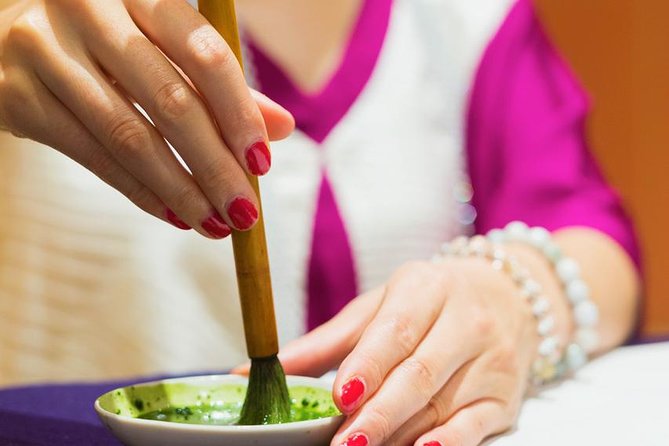
Most visitors encounter matcha in a bowl, a dessert, or a carefully prepared tea service. Here, it becomes the material for calligraphy. That simple change gives the activity its character. You are not only watching a brush move across paper. You are working with something that changes after you have finished.
The matcha’s color gradually shifts and decays with time. The finished work is therefore not meant to remain exactly as it looked at the end of the class. Its changing appearance is part of the idea, much like watching the seasons pass in Japan. That makes this a calmer and more reflective activity than a standard craft lesson.
I like this concept because it gives the souvenir a built-in story. A conventional print remains the same from the day you buy it. A matcha calligraphy scroll carries the memory of the session and continues to change at home. You may want to photograph it early, then keep watching how its color develops.
The experience also connects sight and scent with the natural world. The idea is to notice the visual and olfactive qualities of matcha, along with the passage of time. You are encouraged to slow down and pay attention, rather than rush toward a finished product.
More Tea and Calligraphy Workshops in Japan
- Osaka: Tea Ceremony, Calligraphy, and Kimono Experience
★ 4.9 · 130 reviews - Experience all of Japanese culture and Japanese food experience classes “origami, udon, Japanese food, green tea, calligraphy” in 4 hours
★ 5.0 · 105 reviews - An Amazing set of Cultural experience: Kimono, Tea Ceremony and Calligraphy
★ 5.0 · 69 reviews
Creating your own hanging scroll
The central activity is making a hanging scroll in a relatively short time. The available description does not provide a minute-by-minute schedule, so you should think of the session as a guided creative workshop rather than a series of sightseeing stops.
Shoran teaches you how to approach the material and helps you produce your own piece. The goal is not to copy a famous master or complete a difficult academic exercise. It is to make something personal that you will want to keep.
That distinction matters. If you have never tried Japanese calligraphy, you do not need to arrive with polished brush skills. The teacher’s role is to guide you through the process. If you already enjoy calligraphy, the use of matcha gives the session a different technical and visual character.
Your completed scroll is the most practical benefit of the class. It is light, personal, and connected to the place and activity. You will not simply return home with a souvenir that says Japan in a generic way. You will have made an object during a quiet cultural encounter.
The work is also imperfect by design. Since matcha changes with time, your scroll will not be frozen in its first form. That may appeal to you if you enjoy handmade art and natural materials. It may be less satisfying if you want a durable artwork with a stable color.
Choosing your name in Kanji
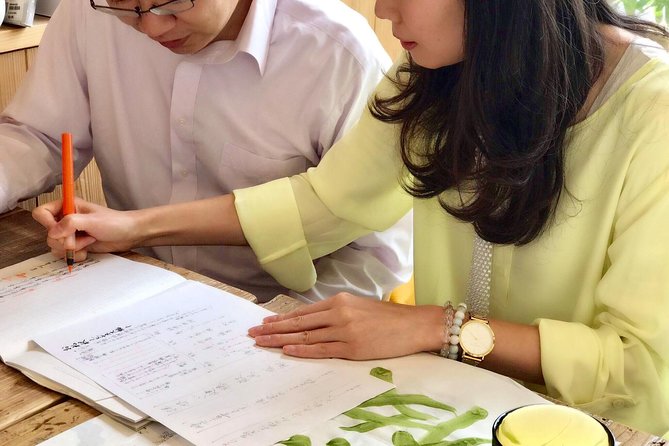
A second major part of the class is receiving your name in Kanji characters. Kanji characters carry meaning, so the aim is not just to find a sound-alike spelling. Shoran helps select characters that suit your personality.
This gives you a personal entry into Japanese writing. You learn that a name can be considered through its meaning, appearance, and character choice, not only through pronunciation. The result is different for each person, which adds value to the scroll you create.
You should expect this part to be personal rather than purely decorative. The selected Kanji are meant to reflect something about you. That makes the piece more meaningful than having your name written in a standard souvenir style.
It is also a good feature for couples, families, and friends who want to compare their finished works. Each person can receive a different set of characters and take home a scroll with a separate identity.
The information provided does not say how many Kanji characters you receive or whether you choose from a set of options. If that detail matters to you, ask Shoran when you book or at the start of the session.
Learning with Shoran in a quiet setting
The class is taught by Shoran, a master calligrapher with teaching experience in the United States. That background may help if you are visiting from abroad and feel unsure about joining a traditional Japanese art lesson.
A teacher who has worked with students from different backgrounds can often explain the activity in a way that makes sense to beginners. The available details do not specify the language used during the session, so confirm that point if you need instruction in a particular language.
The atmosphere is described as traditional and relaxing. The meeting point is given as 2-chōme-2-5 Gofukuchō, Aoi Ward, Shizuoka, 420-0031, Japan. The activity ends at the same place.
The description also refers to a setting just behind Sensoji Temple. Since the listed meeting point is in Shizuoka while Sensoji is associated with Tokyo, check the exact location carefully before setting out. Use the confirmed meeting address in your booking details, and do not rely only on the temple reference.
This location issue is worth treating seriously because a wrong assumption could create a major transport problem. The activity itself is short, so arriving at the wrong city or neighborhood could mean missing most of the session.
Same leaf, a different ritual:
- Kyoto: Tea Ceremony in a Traditional Tea House in Kiyomizu
★ 4.9 · 3,519 reviews - Kyoto: Tea Ceremony Ju-An at Jotokuji Temple
★ 4.9 · 3,207 reviews - Kyoto: 45-Minute Tea Ceremony Lesson Experience
★ 4.3 · 2,378 reviews - World Heritage Kyoto & Nara Uji Authentic Matcha Experience
★ 5.0 · 1,573 reviews
Why the 90-minute format works
An hour and a half gives the session enough space to feel like a cultural activity rather than a quick photo opportunity. You have time to receive instruction, work on the scroll, consider your Kanji name, and experience the changing material.
At the same time, the duration is manageable for most sightseeing schedules. You could fit it between other plans, provided you allow enough time to reach the meeting point and return to your wider schedule.
I would not book this as your only activity of the day. The session is focused and intimate, not a full tour of Shizuoka. Its value comes from concentration and personal attention. You are paying for a quiet creative hour and a half, not for several attractions or extensive transport.
The group limit is 10 people. That is small enough to support a calmer setting than a large class, though the exact amount of individual instruction will depend on the final group size. A full group of 10 will feel different from a private lesson.
The short format also suits people who want a cultural activity without committing to a full-day workshop. Families with older children, couples, solo visitors, and anyone interested in Japanese art may find the length comfortable. Very young children may have trouble with the stillness and care needed for the process, although the provided information says most people can participate.
The value of a $192.69 handmade souvenir
At $192.69 per person, this is not a cheap add-on. The price makes sense only if you place real value on the teaching, personal attention, and finished scroll.
You are not paying for a broad sightseeing route or a large number of included attractions. The value is concentrated in three things: working with matcha, receiving a Kanji name chosen for its meaning, and taking home an original hanging scroll.
I would compare the price with a private or specialist art lesson rather than with a museum ticket. The smaller group, the teacher’s background, and the personal nature of the finished work all help explain the cost.
Still, you should be honest about what kind of souvenir you want. If you prefer a fixed artwork, a standard calligraphy print may offer better value. If you like the idea of an object that changes and records the passage of time, the matcha process is much more distinctive.
The two available assessments are especially positive about the artistic result and Shoran’s message. One person continued to keep the paintings after the session, while another praised the work and expressed interest in taking another lesson. Those details point to the class’s strongest feature: the activity creates something participants feel attached to, rather than something they simply finish and forget.
A thoughtful activity for the right kind of visitor
This experience suits you best if you enjoy hands-on cultural activities, quiet settings, and souvenirs with a personal story. You should also be comfortable with a result that changes over time.
It is a good match for:
- Couples looking for a shared creative activity
- Solo visitors who enjoy art and reflection
- First-time visitors who want a gentle introduction to calligraphy
- Families with participants who can focus during a 90-minute lesson
- Anyone interested in Japanese writing, matcha, or handmade art
It may not suit you if you want a fast, energetic attraction or a detailed tour of Shizuoka. The class is centered on stillness, concentration, and the meaning behind the material.
The experience has a reflective side as well. Shoran connects matcha calligraphy with memories of her grandfather, his calligraphy room, and the tea garden nearby. The activity is presented as a chance to feel connected to nature and to look inward for a moment.
You do not need to approach it as a spiritual exercise. You can simply enjoy the craft. But if you like experiences that leave room for silence, this one offers more than a basic souvenir workshop.
Practical points for planning your visit
The activity uses a mobile ticket, so keep your booking details available on your phone. Confirmation is expected within 48 hours, subject to availability. Do not make tight, nonrefundable plans around the session until your place is confirmed.
The activity is near public transportation, which makes the meeting point easier to reach without a car. The supplied information does not identify the nearest station or explain the walking route, so check the address before departure.
Service animals are allowed, and most people can participate. No special fitness requirement is stated. The main practical issue is not physical exertion, but arriving at the correct place and having enough time to focus during the session.
The maximum group size is 10 people. If you want the quietest possible setting, booking for a less busy date may help, though no guaranteed private option is stated.
The experience requires good weather. If poor weather causes cancellation, you will be offered another date or a full refund. It also requires a minimum number of participants, so a cancellation can occur if that minimum is not reached, with another date, another experience, or a full refund offered.
You can cancel for a full refund up to 24 hours before the local start time. Changes or cancellations inside that 24-hour window are not accepted for a refund.
What makes this different from ordinary calligraphy
Traditional calligraphy usually places the focus on the brushstroke, the character, and the finished paper. Matcha Calligraphy adds another element: the finished material continues to change.
That change gives the class a strong sense of time. You create the work in one moment, but the artwork keeps developing afterward. The fading color can remind you that handmade objects do not need to remain perfect to remain valuable.
The activity also links calligraphy with tea culture without presenting itself as a standard tea ceremony. The focus is on matcha as a natural substance and artistic medium. That makes it a useful choice if you have already seen temples and gardens but want a more personal way to engage with Japanese culture.
The result is not a major attraction or a grand performance. Its appeal is smaller and more intimate. You sit with a teacher, make a piece of art, learn something about Kanji, and leave with an object that carries the memory of the session.
Should you book Matcha Calligraphy?
Book it if you want a calm, hands-on cultural activity and you are willing to pay for a personal lesson and handmade souvenir. The changing matcha color, individualized Kanji name, and guidance from Shoran give the experience a clear identity.
Think twice if your budget is tight, if you want a longer activity, or if you prefer a souvenir that remains unchanged. At $192.69, this is a specialist experience rather than a casual stop.
Before booking, confirm the exact meeting location, especially because the description references Sensoji while the stated address is in Shizuoka. If that detail is clear and the price fits your plans, this is a thoughtful way to spend 90 minutes creating something that will continue to tell its story after you return home.
FAQ
Where does Matcha Calligraphy take place?
The stated meeting point is 2-chōme-2-5 Gofukuchō, Aoi Ward, Shizuoka, 420-0031, Japan. The activity ends back at the meeting point.
How long does the experience last?
The experience lasts approximately 1 hour and 30 minutes.
How much does Matcha Calligraphy cost?
The listed price is $192.69 per person.
What will I make during the activity?
You will make your own hanging scroll using matcha calligraphy.
Will I receive my name in Kanji?
Yes. You will learn Kanji characters for your name, with the characters chosen to suit your personality and their meanings.
Who teaches the calligraphy session?
The session is taught by Shoran Japanese Calligraphy. The calligraphy master has teaching experience in the United States.
How many people can join the activity?
The activity has a maximum of 10 participants.
Can I cancel for a full refund?
Yes. You can cancel at least 24 hours before the experience start time for a full refund.
What happens if the activity is canceled because of weather or low participation?
You will be offered another date or experience, or a full refund.
More Matcha Experiences in Japan
- Kyoto: Arashiyama Bamboo Forest, Monkeys, Matcha & Temple Tour
★ 5.0 · 759 reviews - Matcha Making Class in Tokyo with Authentic Japanese Sweets Set
★ 5.0 · 744 reviews - Kyoto: Tea Museum Tickets and Matcha Grinding Experience
★ 4.9 · 739 reviews - Matcha Making Class in Osaka with Authentic Japanese Sweets Set
★ 5.0 · 509 reviews
More Zen Tea Sessions around Japan
- Kyoto: Tea Ceremony Meditation – Make Matcha with Tea Master
★ 4.8 · 406 reviews - Kyoto: Mindful Tea Ceremony in 100-Year-Old Teahouse
★ 4.8 · 160 reviews - Tokyo: Practicing Zen with a Japanese Tea Ceremony
★ 4.7 · 105 reviews - Nara:5 Type of Tea Tasting & Mindful Tea Ceremony
★ 5.0 · 28 reviews
Newly steeped around Japan
- Yokohama : Tea Ceremony with Sweets and Souvenir★ 5.0 · 5 reviews
- Whisk Your Own Matcha: A Zen Matcha Experience at Temple★ 3.6 · 7 reviews
- Walking Tour: Yanaka,Nezu& Sendagi: Tea Ceremony & Old Tokyo★ 5.0 · 3 reviews
- Visit local home for music and tea ceremony near Disney★ 4.9 · 13 reviews
- Trip to Kamakura & Enoshima: Shrines, Seaside, Temples &Tea★ 5.0 · 11 reviews
- Yokohama: Sushi & Gyoza Cooking with Matcha & GreenTea Experience★ 5.0 · 3 reviews
- Kyoto tea town for matcha lovers★ 5.0 · 16 reviews
- Uji: Private immersion into Kyoto’s tea and reglious culture★ 5.0 · 17 reviews
Zen Tea & Meditation Experiences, compared.
Kyoto: Tea Ceremony Meditation – Make Matcha with Tea Master
Read our review →
Kyoto: Mindful Tea Ceremony in 100-Year-Old Teahouse
Read our review →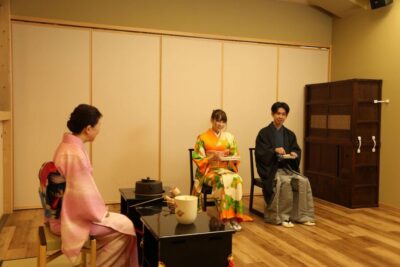
Tokyo: Practicing Zen with a Japanese Tea Ceremony
Read our review →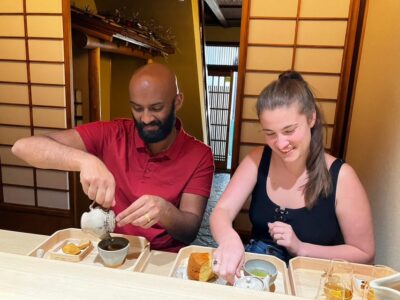
Nara:5 Type of Tea Tasting & Mindful Tea Ceremony
Read our review →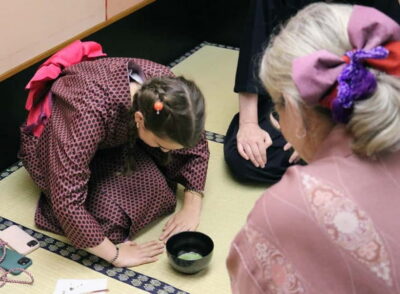
Learn Zen in a class of making Matcha tea near Osaka Castle
Read our review →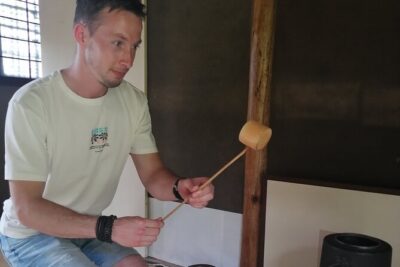
The Art of Mindful Living: Tea Ceremony in Kyoto
Read our review →
Shizuoka Shore Excursion: Zen, Matcha & Calligraphy Shimizu Port
Read our review →
Hue Retreat: Tea and Meditation with Vegetarian Meal
Read our review →Browse the lists this tea experience appears in